Fire damper control
Bring together status, motor tests and test logs for the building’s fire dampers. View end positions and faults in the BMS, on floor plans and on EcoScreen.
KNX · Econex
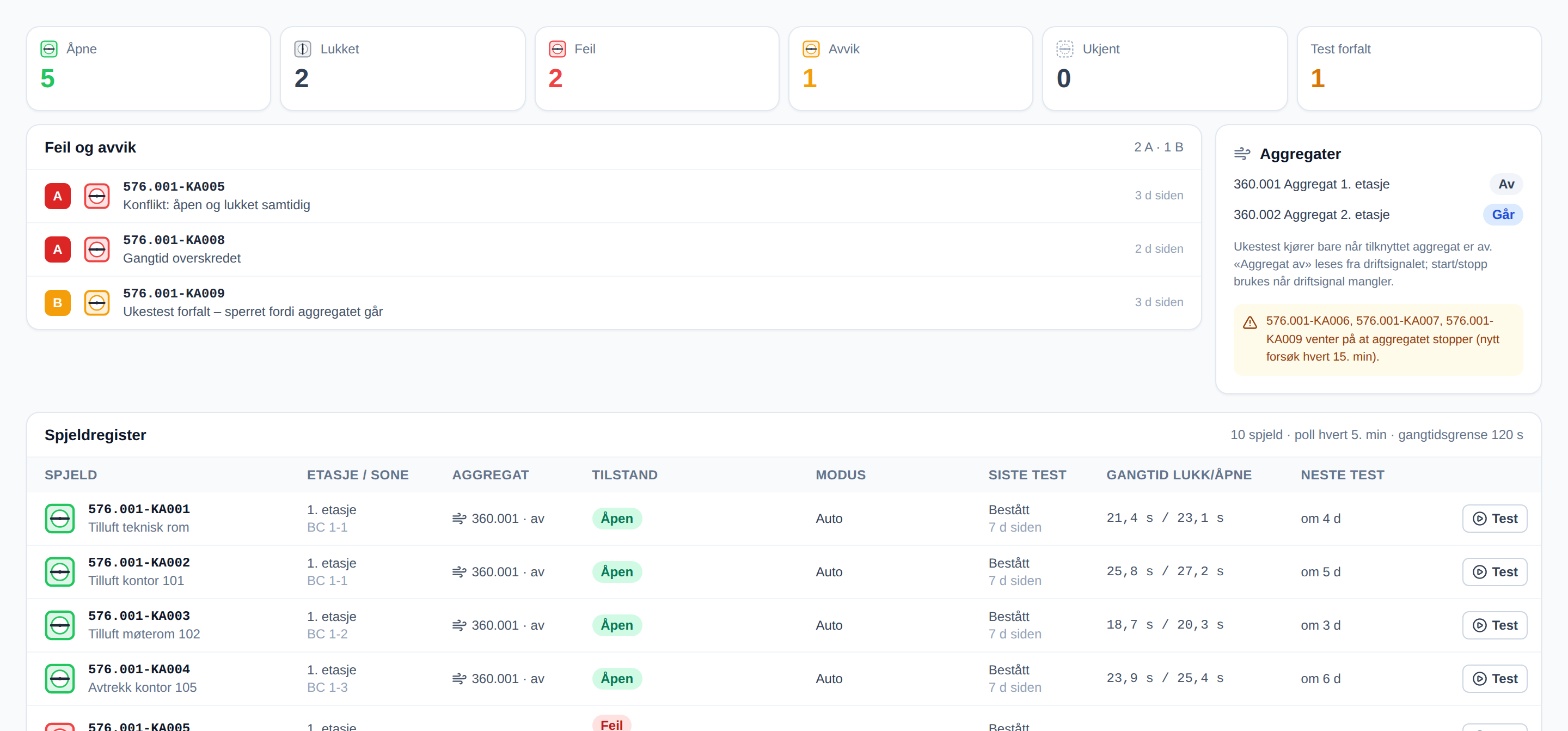
Screenshots and clips from the BMS demo. All data is synthetic. Click a screenshot to view it at a larger size.
How it works
From setting up each damper to checking end positions and documenting tests.
- 01
Setup with three group addresses
Each damper is controlled by an Instell SU1 KNX mini relay. Two end switches for open and closed positions connect to the relay’s inputs. Exactly three KNX group addresses are used per damper: control, open and closed. All logic runs in Econex, not in KNX. Each damper is placed on a floor plan and linked to the air handling unit it serves.
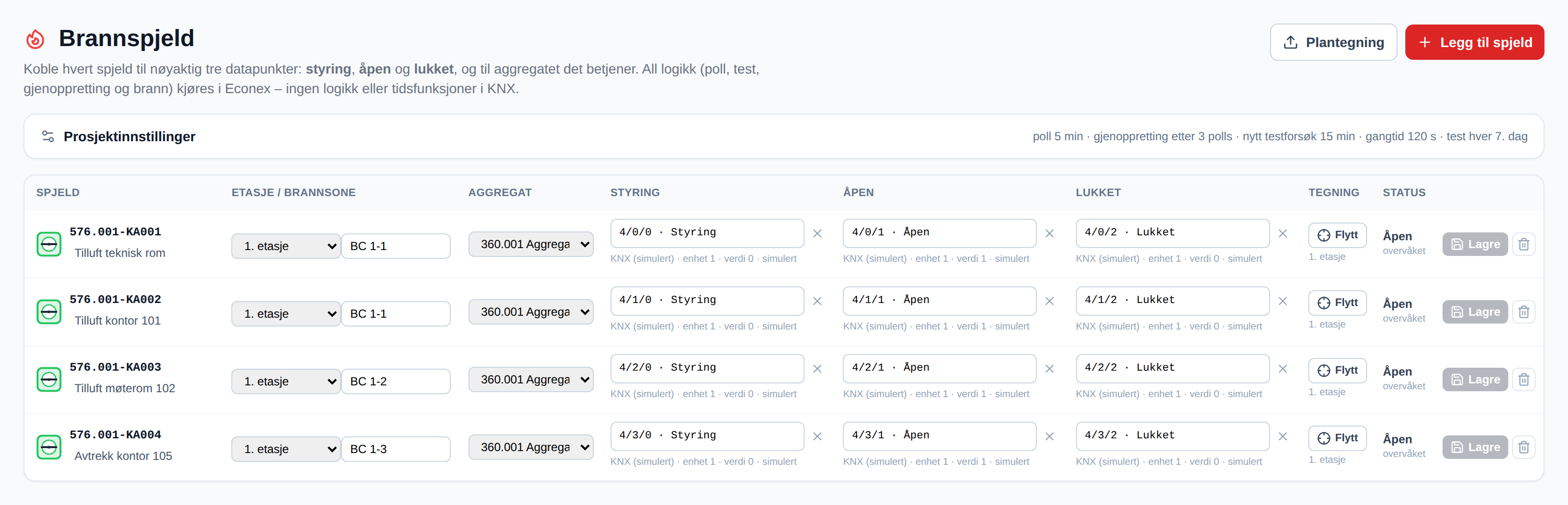
Configure three group addresses and the linked air handling unit per damper. - 02
End positions every five minutes
Econex polls the end positions – every five minutes by default. No response produces a no-feedback / communication-lost fault. Status appears in the overview and on the floor plan. Click a damper for details.
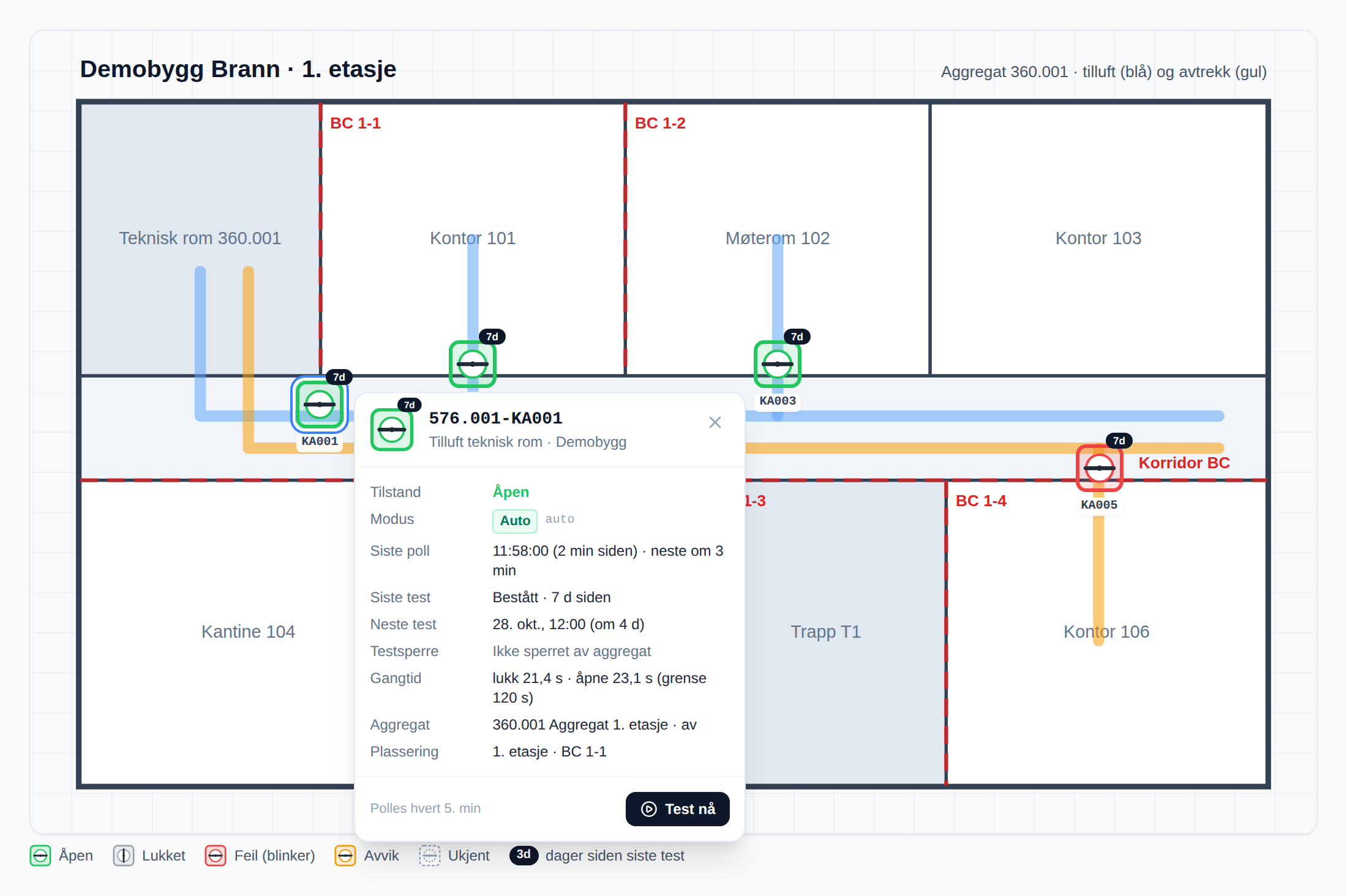
Status on a floor plan. Click a damper in the BMS for details. - 03
Full test when communication returns
When a damper that was not responding responds again, Econex automatically starts a full close/open test. End positions are checked before the damper returns to auto mode.
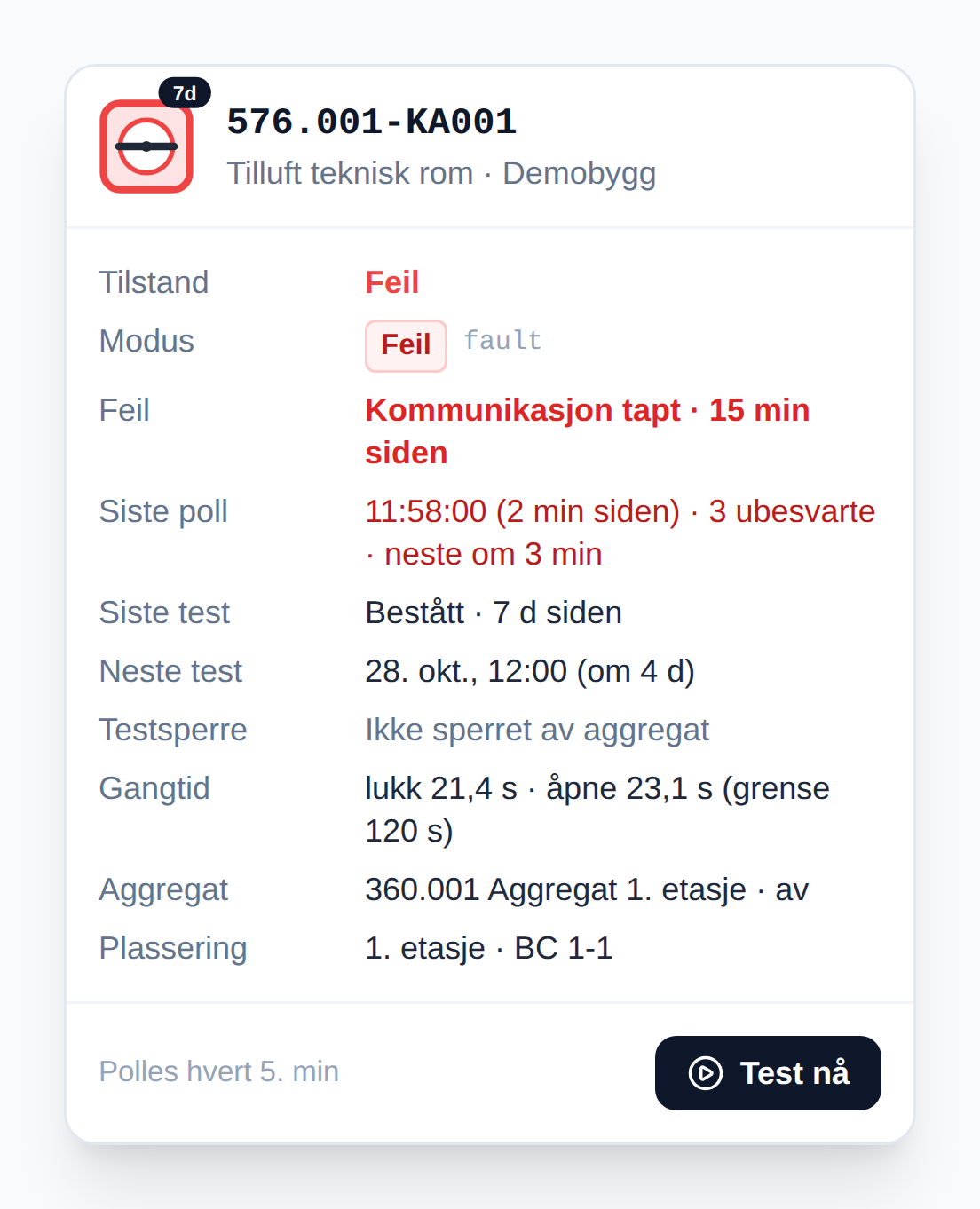
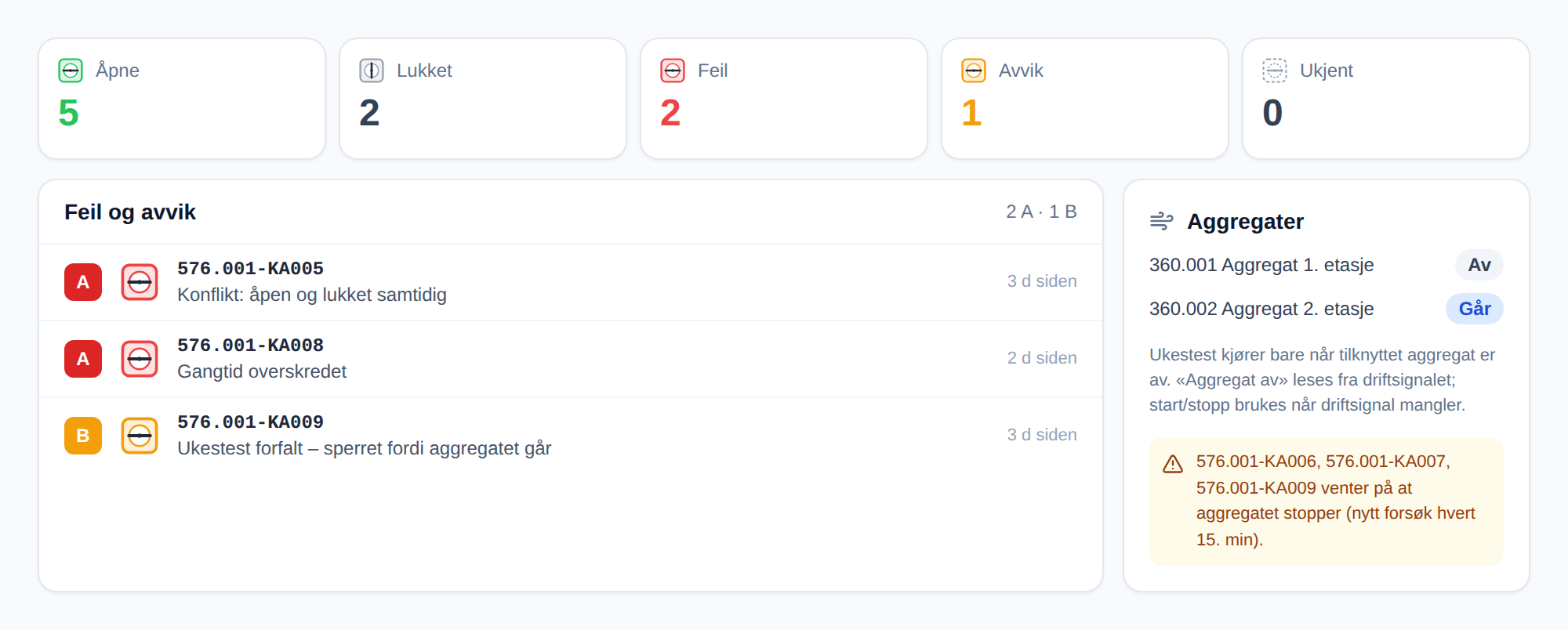
Missing feedback appears as a fault. 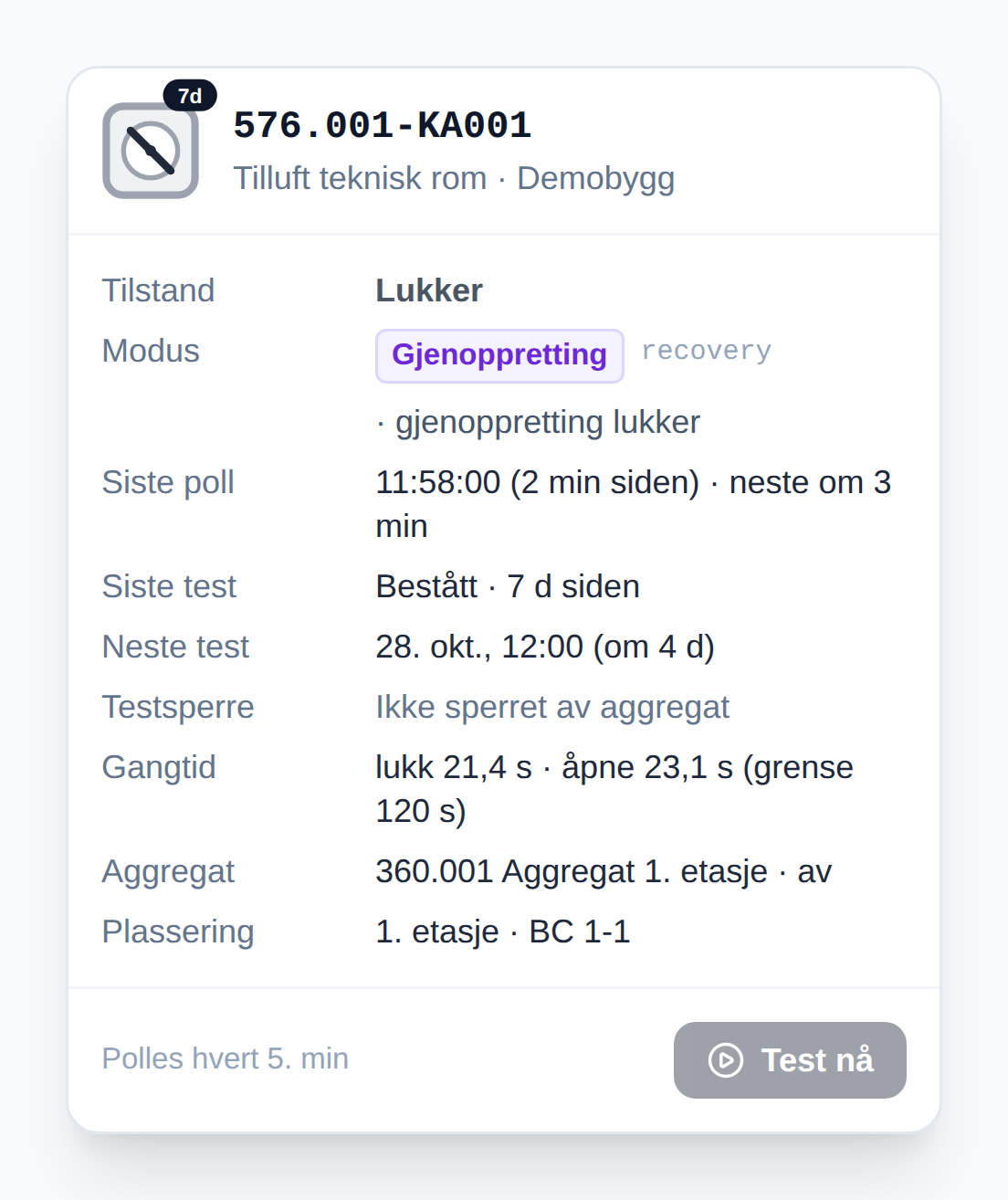
Restored communication triggers a full test. 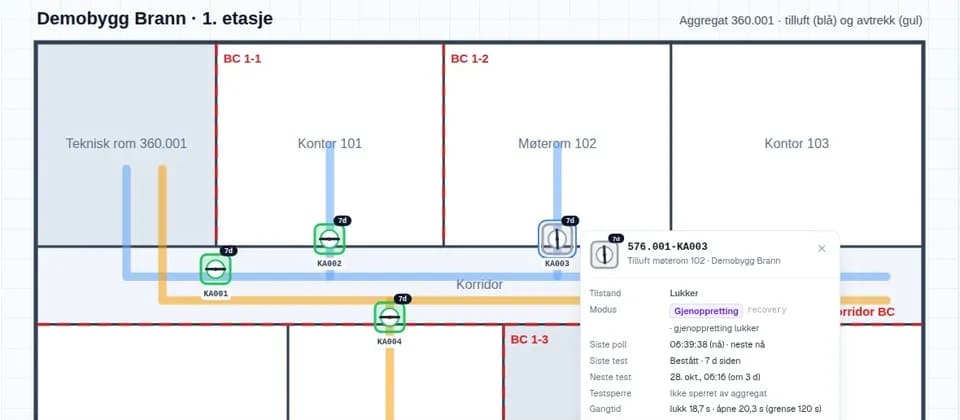
Clip: full recovery test, end-position checks and return to auto mode. - 04
Weekly test when the air handling unit is stopped
The motor test runs every seven days by default, only when the running signal confirms that the linked air handling unit is stopped. While the unit is running, the test is blocked and retried later. Travel times are measured and logged.
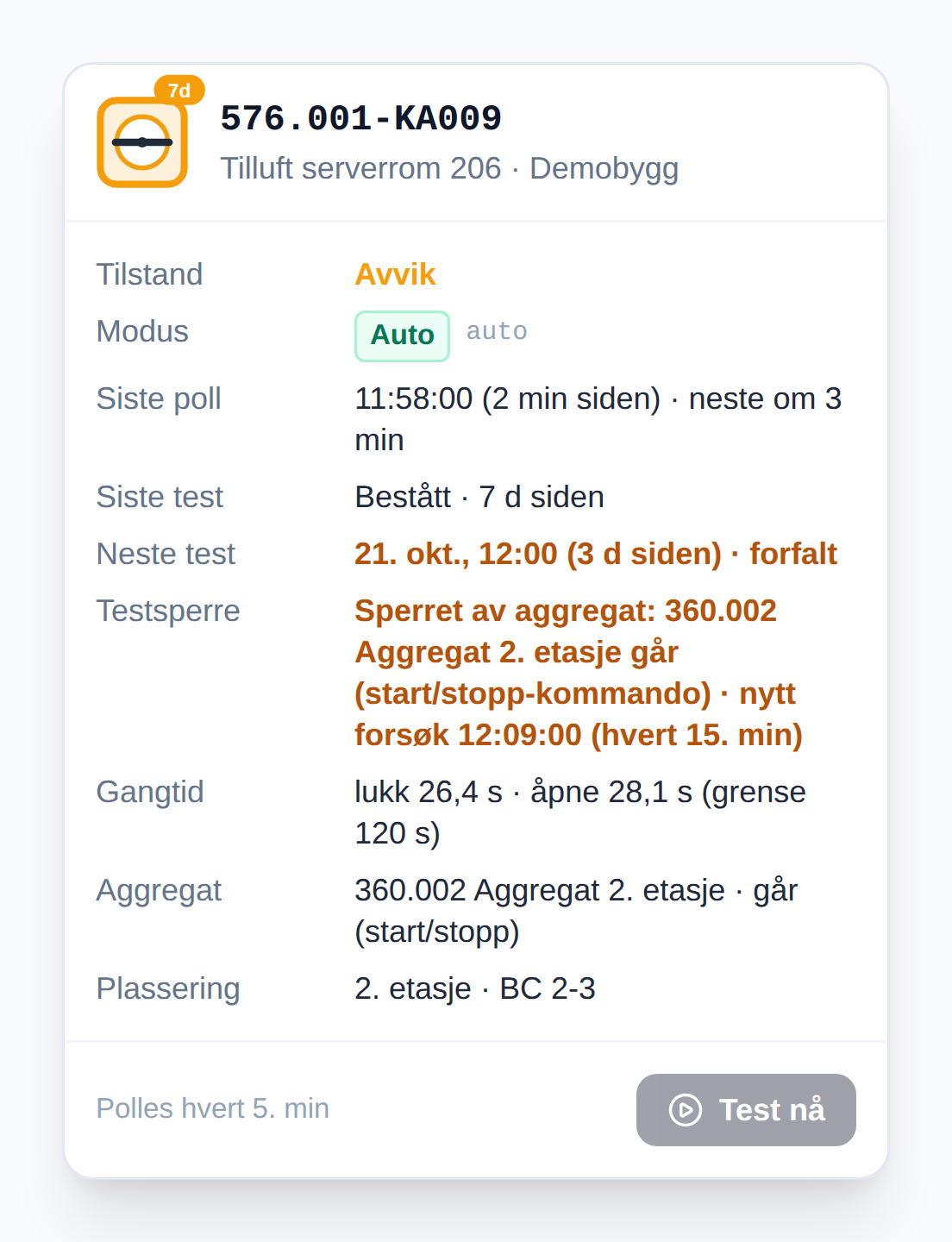
The test waits while the air handling unit is running. 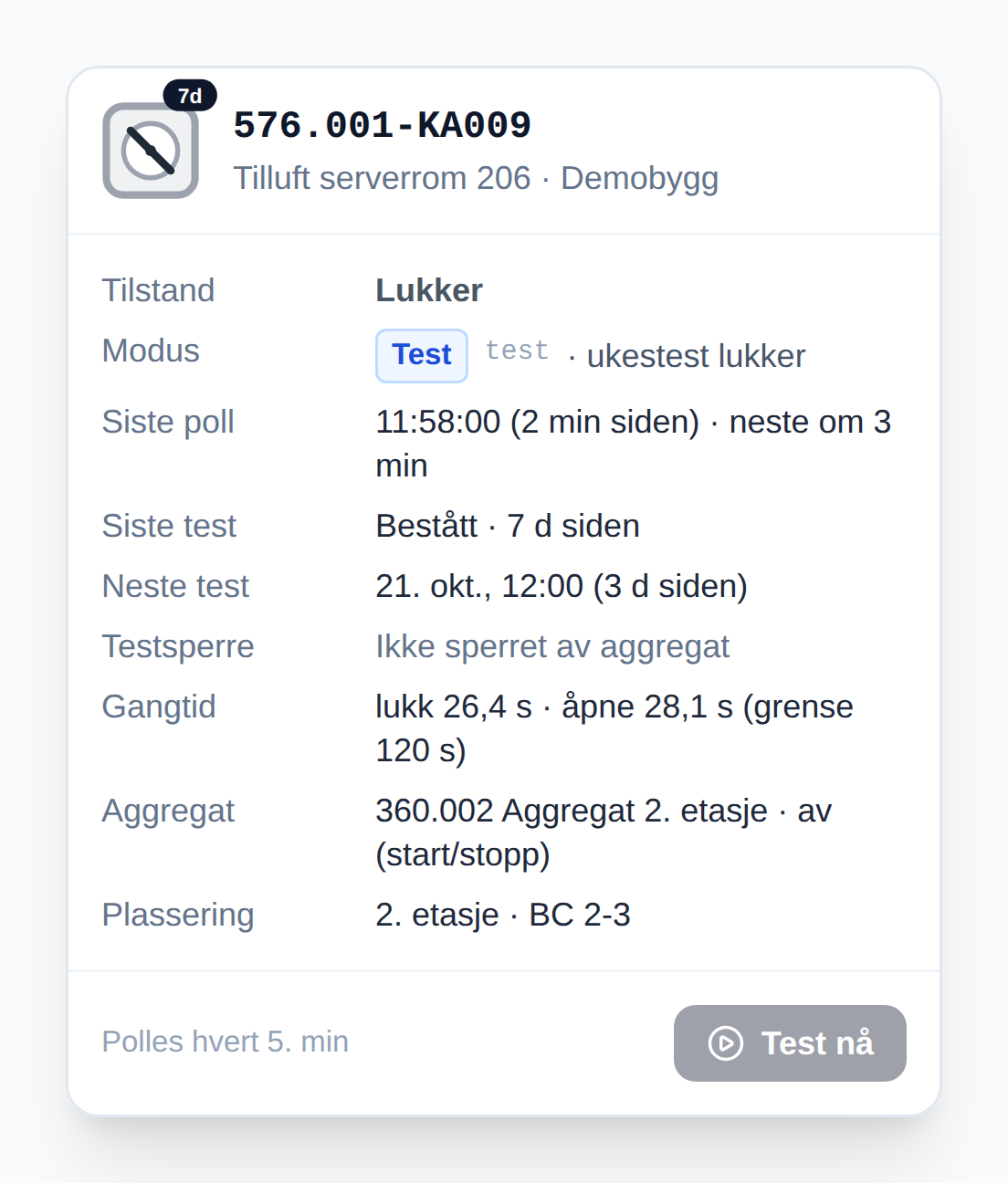
With the unit stopped, the motor test can run and travel times are logged. - 05
On fire activation: close all and check
On fire activation, all dampers close. Econex checks end positions and reports “all closed”, or shows a fault for dampers that have not closed. Resetting after a fire requires an authorised user.
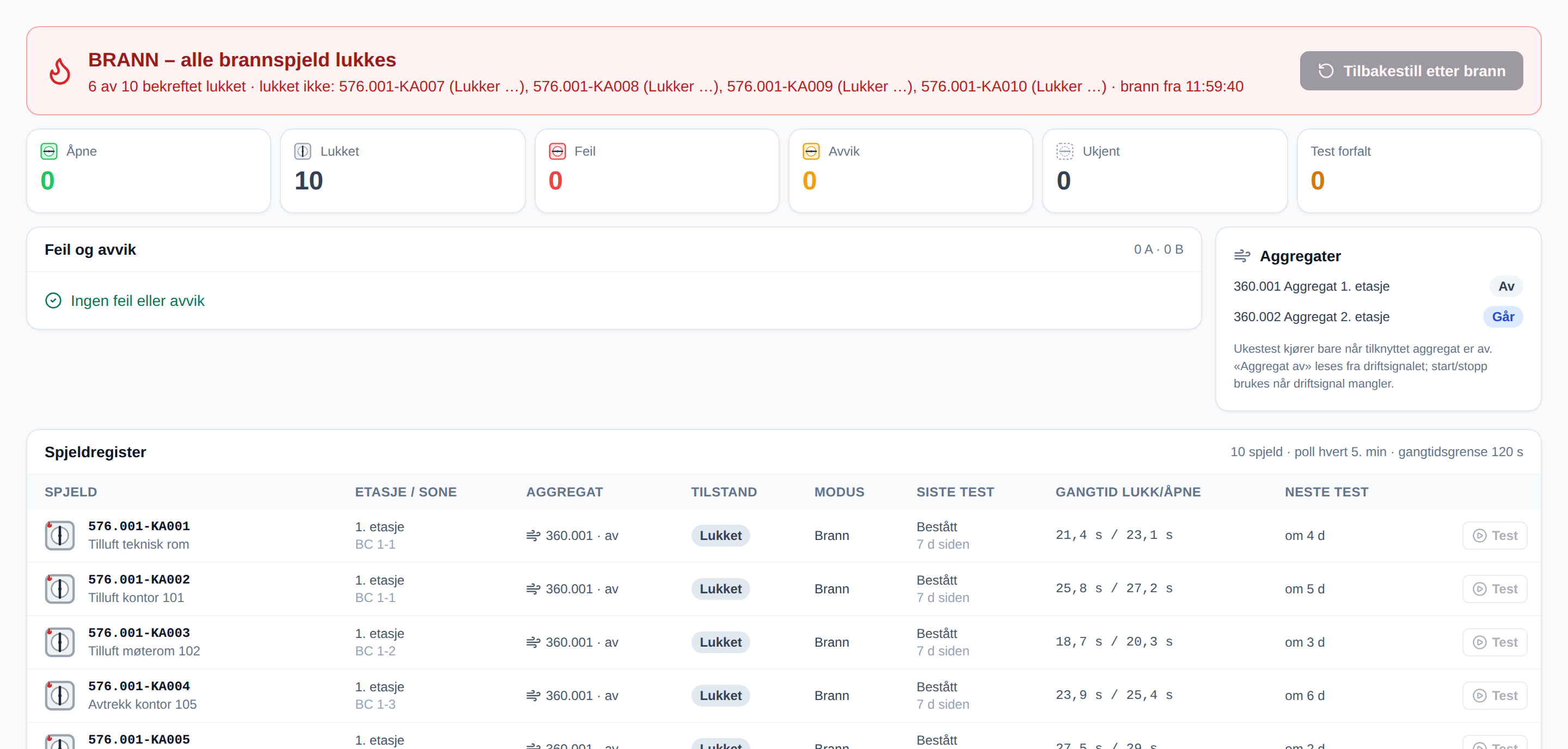
Fire mode: Econex monitors closing and checks end positions. 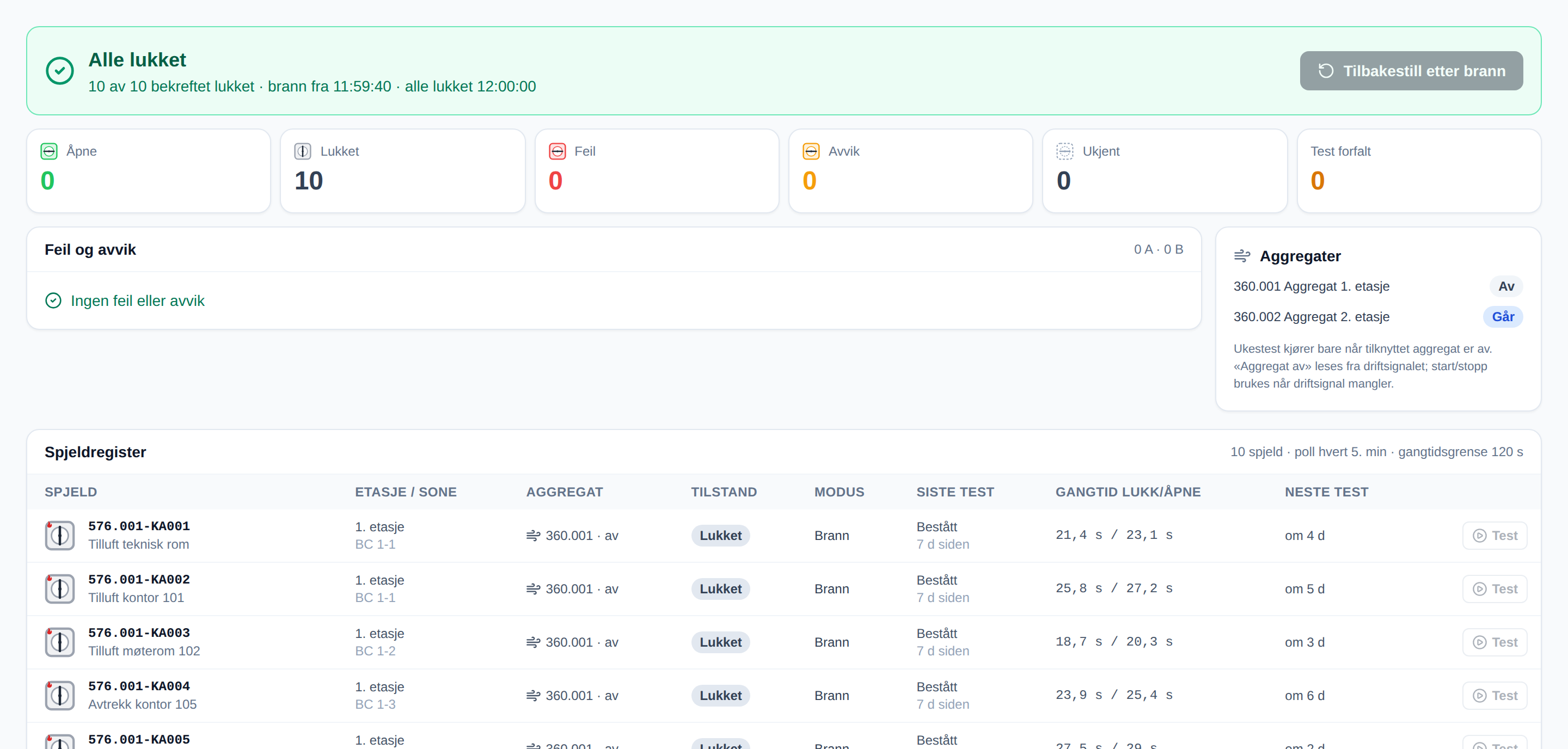
Confirmation when all are closed. Deviations appear as faults on the affected damper. 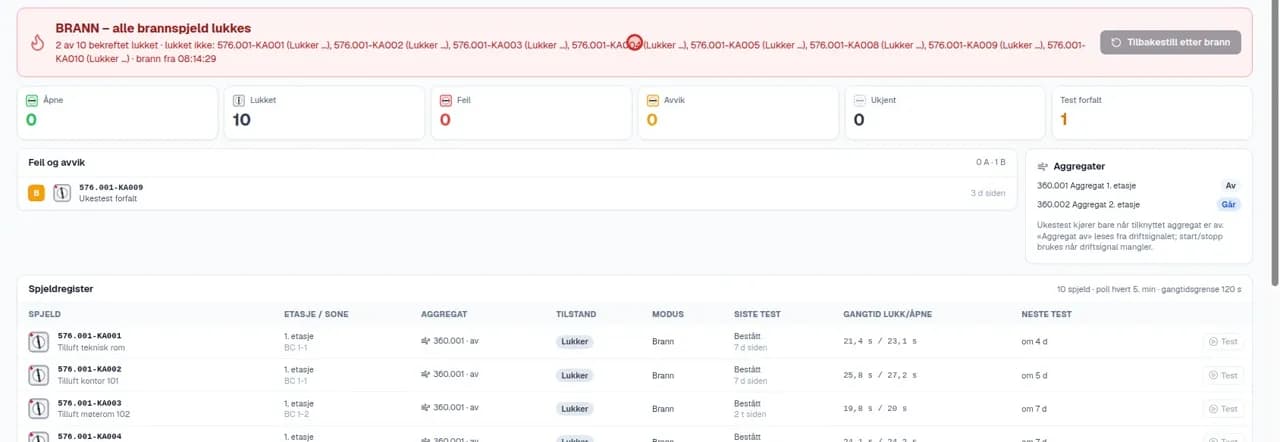
Clip: fire mode from closing to confirmed end position.
What is supplied per damper
Clear fault messages
Econex distinguishes between conflict (both end switches active), no feedback, travel time exceeded, communication lost and position deviation.
- SU1 KNX mini relay
- Instell SU1 with 1 × 16 A, NC/NO, two inputs and temperature. The open and closed end switches connect to the two inputs.
- Three KNX group addresses
- Control, open and closed. Monitoring, tests and all other logic are handled in Econex.
- Placement on a floor plan
- Damper status is shown at its location in the building. Click the symbol for details.
- Link to an air handling unit
- The running signal from the linked unit determines when the weekly test can run.
- Test log
- Travel times and test results are logged to document completed checks.
Benefits
Status where you need it
View all dampers together, on a floor plan or on the EcoScreen wall panel.
Automatic checks during operation
Periodic polling and motor tests help identify faults. A full test checks the damper after communication returns.
Documented checks
The test log brings together test results and travel times for follow-up.
Section 5 of the Norwegian fire prevention regulations requires the owner to ensure that safety devices are inspected and maintained. Read the DSB guidance (Norwegian).
Pricing by number of dampers
The price depends on the number of dampers and KNX mini relays. Contact us with the damper count and a description of the building for a quote.
Contact
We can help you clarify the setup for your building’s fire dampers.